Critical minerals map
Mines that produce critical minerals such as lithium, cobalt, nickel, copper and rare earths. Zoomed out the map uses Wikidata; zoomed into a region from zoom 6, it switches to USGS deposit records, which are heavy on the United States.
Free · No sign-up · Works in any browser
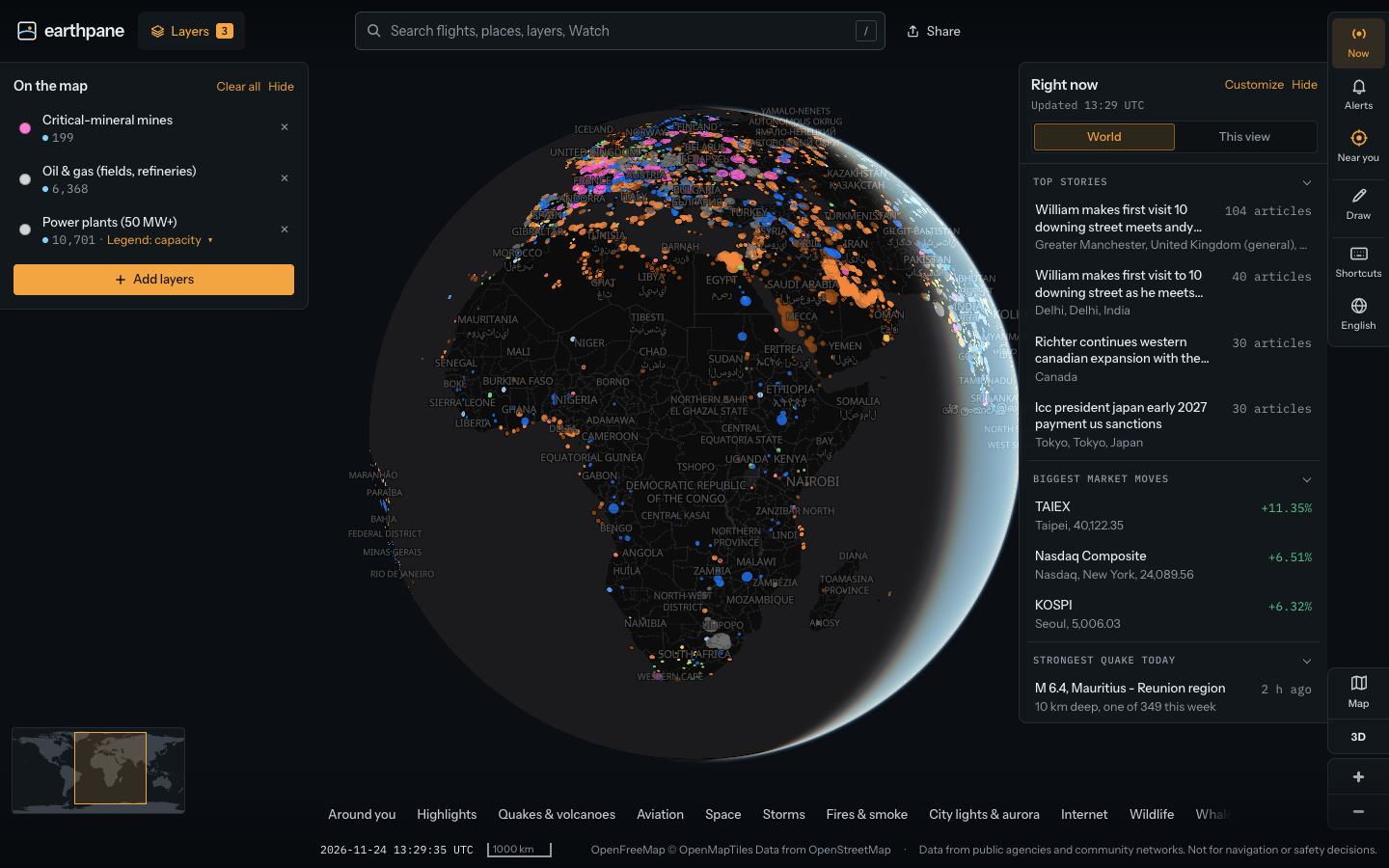
What's on the map
- Critical-mineral minesMines for lithium, cobalt and other minerals
- Oil & gas (fields, refineries)Oil and gas fields and refineries
- Power plants (50 MW+)Power plants of 50 MW and up, by fuel
How to use it
- Open the map. Dots are coloured by main commodity, for example green for lithium and blue for cobalt.
- Zoom into a region. From zoom 6 the dots change to USGS Mineral Resources Data System records in view.
- Tap a dot for its name and commodities, plus the development status where USGS records it.
Questions
Which minerals are included?
Zoomed out: lithium, cobalt, nickel, copper, uranium, graphite, rare earths, tungsten, manganese, tin, gallium, germanium and platinum. Zoomed in, USGS deposits are filtered to a list based on the USGS critical minerals list, plus copper and uranium.
Why do the dots change when I zoom in?
The zoomed-out view is Wikidata mines. The zoomed-in view is USGS deposit records, which come from a different database with different coverage.
Is it a full list of mines?
No. Both sources are incomplete, and the USGS records are strongest in the United States.
More live maps
- Oil and gas mapSee oil fields, gas fields and refineries on a free 3D map
- Population density mapSee where people live on a free 3D globe: population density in 2020, from NASA SEDAC's Gridded Population of the World, in people per square km
- Live earthquake mapSee earthquakes happening now on a live world map, from USGS and EMSC, updated every few minutes
- Live news mapSee where the world's news is happening on a free live map